Civil Engineering
The mission of the Department of Civil Engineering is to train high quality civil engineers who have a good command of English, who have the capabilities or skills to learn and research, formulate solutions to problems and who can meet the needs of both the public and private sectors.
The aim of the Civil Engineering Undergraduate Programme is to teach students the fundamentals of civil engineering, to develop their creativity, to train them to research, plan, design and how to apply their knowledge. The department also strives to create civil engineers who are responsible, inquisitive, entrepreneurs, team players, open to new ideas and learning, ethical, environmentally conscious and competitive.
The undergraduate curriculum is designed to match the highest standards of similar institutions abroad. In order to be successful in the department, one must have an interest and be creative in subjects like mathematics, engineering, computer and the environment.
Second year courses aim to develop students’ engineering skills and are supplemented by basic engineering courses. Undergraduate students may also benefit from a wide array of elective courses such as statistics or other non-technical subjects, expanding their information on social issues. In the third year students are required to take the compulsory courses on structure static, soil mechanics, fluid mechanics, hydromechanics, transportation and basic construction . Students are once again offered a wide range of technical electives as well as the opportunity to apply their acquired knowledge in the lab. Final year students may take advanced design courses or other electives related to their area of interest. All graduating students are required to prepare and submit a graduation project using the knowledge they have acquired during their 4 years of studies.
Students are required to complete a total of 146 credits in exchange for the 46 courses they will take during the 4 year undergraduate programme and undergo 2 summer training periods before they can graduate.
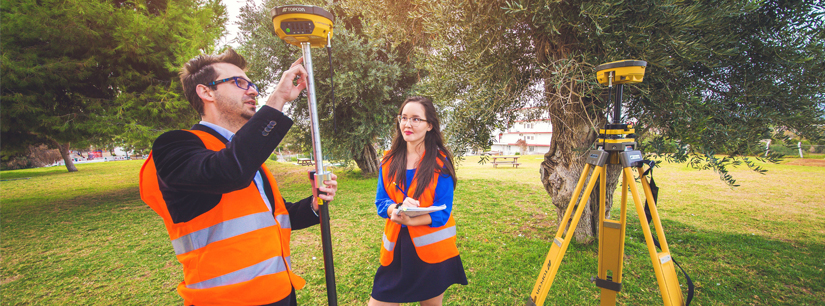
Since the Department of Civil Engineering requires both theoretical and applied skills, the department offers students the advantage of benefitting from laboratories equipped with the latest technological infrastructure. Successful graduates of the department may find job opportunities in different areas of the construction sector ranging from real estate or commercial construction projects to industrial construction projects as well as the construction of highways, motorways, airports, ports, tunnels, dams, bridges, water treatment and pump facilities.
Educational Objectives of the Civil Engineering Program
Students who graduate from EUL’s Civil Engineering Department are expected to:
EO1 : Be competitive candidates in the civil engineering field, capable of holding positions of employment in local, national and international companies; or be able to work in the public sector as a field engineer, construction site manager, supervisor, etc.; or be capable of establishing their own company for the purposes of offering, e.g., consultancy, auditing or management services
EO2: Provide practical solutions to problems by applying their knowledge of modelling and their ability to design, develop and implement in at least one of the key areas in civil engineering: construction, construction materials, geotechnical engineering, transportation engineering and hydraulic engineering
EO3: Adopt lifelong learning as a core principle in their working life, keep up to date with the latest developments in their field and maintain a demonstrable commitment to continued professional development
EO4: Be able to successfully undertake postgraduate research work in order to make a positive contribution to the R&D requirements of industry.
Civil Engineering Program Outcomes
The Program Outcomes for the Civil Engineering Department at the European University of Lefke are listed below. Students graduating from the program should have:
i. Adequate knowledge in mathematics, science and engineering subjects pertaining to the civil engineering discipline; ability to use theoretical and applied knowledge to solve complex engineering problems.
ii. Ability to identify, formulate, and solve complex engineering problems; ability to select and apply proper analysis and modeling methods for this purpose.
iii. Ability to design a complex system, process, device or product under realistic constraints and conditions, in such a way as to meet the desired result; ability to apply modern design methods for this purpose.
iv. Ability to devise, select, and use modern techniques and tools needed for analyzing and solving complex problems encountered in engineering practice; ability to employ information technologies effectively.
v. Ability to design and conduct experiments, gather data, analyze and interpret results for investigating complex engineering problems or civil engineering specific research questions.
vi. Ability to work efficiently in intra-disciplinary and multi-disciplinary teams; ability to work individually.
vii. Ability to communicate effectively in Turkish, both orally and in writing; knowledge of a minimum of one foreign language; ability to write effective reports and comprehend written reports, prepare design and production reports, make effective presentations, and give and receive clear and intelligible instructions.
viii. Recognition of the need for lifelong learning; ability to access information, to follow developments in science and technology, and to continue to educate him/herself.
ix. Consciousness to behave according to ethical principles and professional and ethical responsibility; knowledge on standards used in engineering practice.
x. Knowledge about business life practices such as project management, risk management, and change management; awareness in entrepreneurship, innovation; knowledge about sustainable development.
xi. Knowledge about the global and social effects of engineering practices on health, environment, and safety, and contemporary issues of the century reflected into the field of engineering; awareness of the legal consequences of engineering solutions.
Administration
Chairperson:
Asst. Prof. Dr. Şevket BOSTANCI
Contact Details
Tel: +90 392 660 2000 – 2501
Fax: +90 392 660 2503
Postal Address: European University of Lefke
Lefke, Northern Cyprus TR-10 Mersin, Turkey
E-mail: engineering@eul.edu.tr